

Home
Company logo

6,292 incidents. We found the groups responsible for 9.8 days of average delay.

Send us your ticket exports. In 48 hours you get a leadership-ready decision pack: the bottleneck groups, the recurring demand patterns, the automation candidates, and a 90-day action plan with named owners.

  • Top 3 bottleneck groups identified with evidence
  • 3,549 automation candidates ranked by volume and friction
  • 1,443 prevention opportunities across recurring patterns
  • 6 leadership-ready action plans with named owners

From export to decision pack β€” in 48 hours

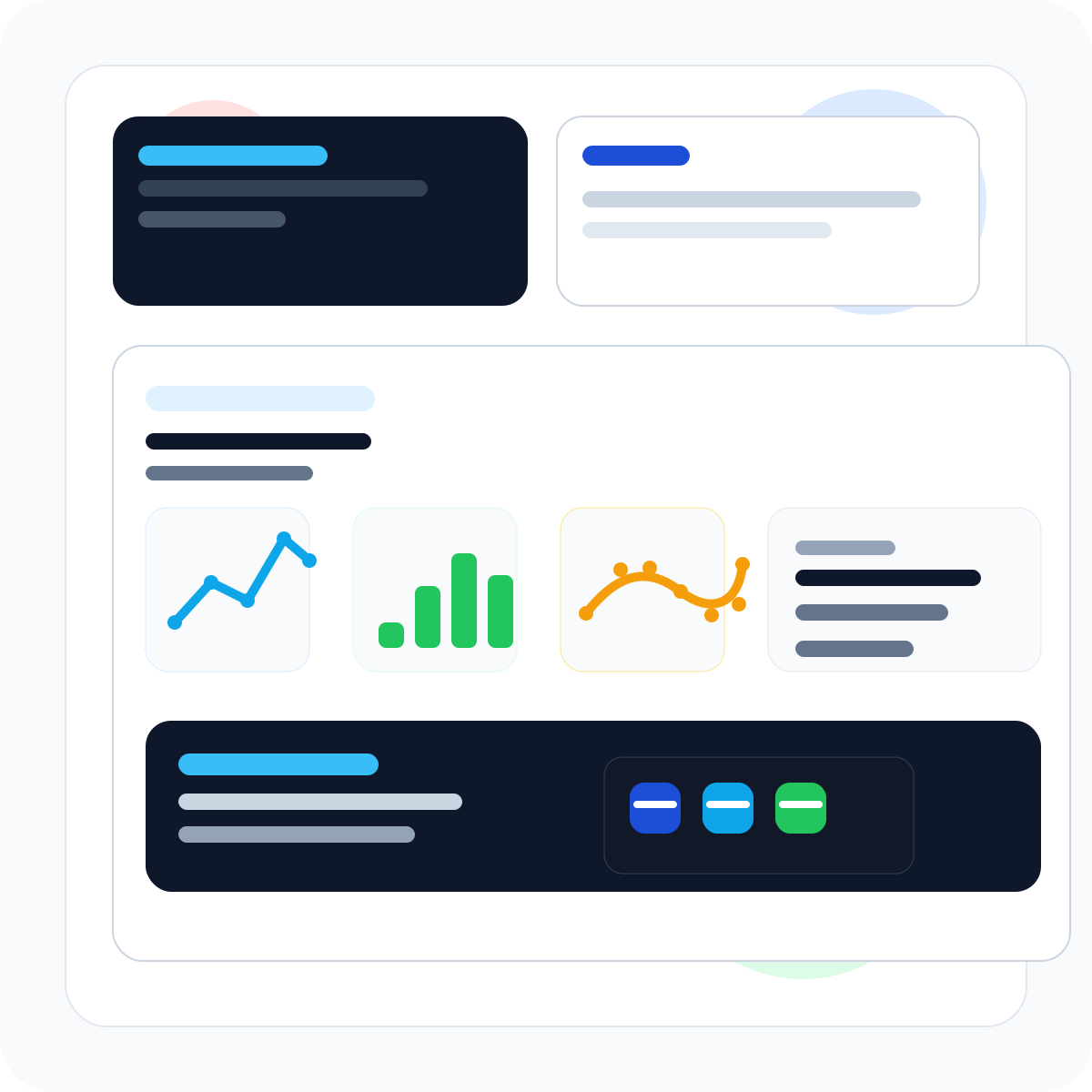
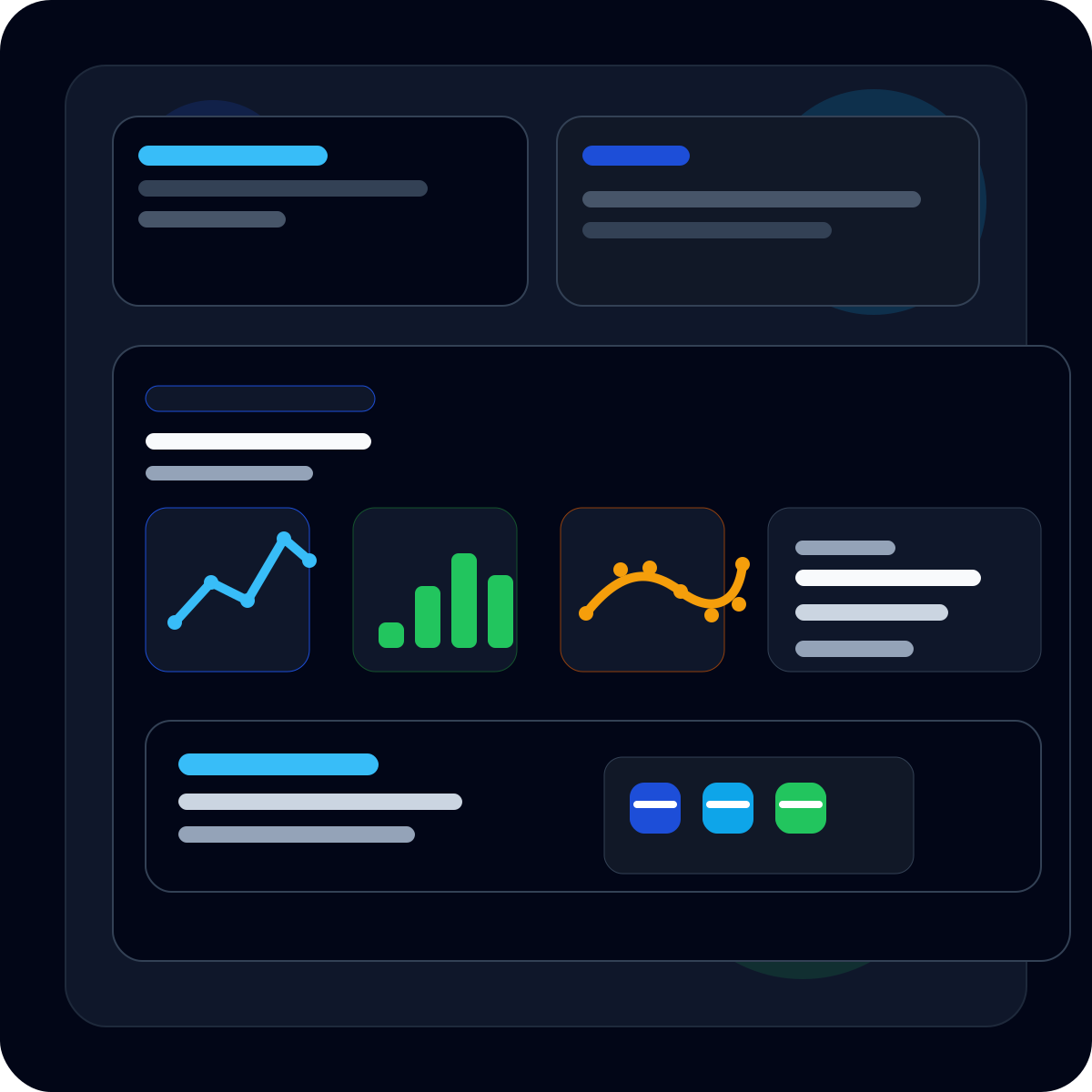
ITSM Intelligence showing bottleneck groups, automation candidates, and a 90-day action plan

We thought our slowest groups had 4-day delays. The sprint surfaced 192h and 262h medians β€” and named the owners.

Head of IT Operations - Global Services Team testimonial
Head of IT Operations
Global Services Team

PR/PO/SES workflow patterns drove 24% of all incidents. We had no idea it was that concentrated until we saw the analysis.

IT Service Manager - Enterprise Support testimonial
IT Service Manager
Enterprise Support

Six action plans with named owners and expected effects. That's the first ITSM output my exec team actually funded.

CIO - Mid-market Technology Company testimonial
CIO
Mid-market Technology Company

You can see ticket volume. You can't see where the days are going

Most ITSM teams know the queue is heavy. Far fewer can point at the specific groups, demand patterns, and ownership gaps that explain a 9.8-day average delay β€” and turn that into a plan leadership will fund.

Incidents and tasks blended together
Most reports collapse 6,000+ incidents and 13,000+ task records into the same view. The friction lives in the separation, and that's where decisions get blurry.
Bottleneck groups are invisible
Volume reports don't tell you which assignment group is sitting on a 192h or 834h median resolution. Without that, you can't prioritise.
Recurring demand looks like noise
Procurement and access-management patterns repeat thousands of times. Until they're clustered and ranked, they keep arriving as new tickets every week.
No backlog leadership will sign
Insights without owners, evidence, and expected effects don't survive an exec review. You need a 90-day plan, not another deck.

From raw export to a 90-day action plan, in one Diagnostic Sprint

We validate the data, separate incidents from tasks, find the recurring demand families, and return outputs your team can act on β€” not another dashboard to manage.

We validate before we conclude

Schema mapping, field coverage, and a low-confidence row check below 8%. No recommendations on bad data β€” and you see the quality report before the findings.

We separate incidents from tasks

6,292 incidents and 13,046 tasks kept on independent tracks throughout β€” so the patterns you act on are the patterns that actually exist.

We name the groups and the actions

Top demand families ranked, bottleneck groups identified with median resolution evidence, and 6 action plans with owners and expected effects.

Validated before conclusions
Fully traceable output
90-day backlog

Incidents analyzed

6,292

Real SAP Finance Operations export, April 2024 β€” December 2025

Automation candidates surfaced

3,549

Ranked by volume and friction across the recurring demand families

Action plans with named owners

6

Each with evidence, owner, and expected effect β€” leadership-ready

Time to decision pack

48h

From export received to a 90-day backlog you can present

How one sprint turns 6,292 incidents into a decision pack

You send the exports. We return a 90-day plan in 48 hours: top demand patterns, bottleneck groups with median delays, 3,549 automation candidates, 1,443 prevention opportunities, and 6 owner-assigned actions.

YouTube video placeholder

ITSM Intelligence β€” how a Diagnostic Sprint works

Replace this placeholder with the product walkthrough or executive demo video when it is ready.

Pricing

Start with a one-time Diagnostic Sprint, then keep the same decision pack current with monthly Continuous Intelligence.

One-off engagement

Diagnostic Sprint

Base package starts at EUR 7,500 for up to 10,000 rows, then +EUR 2,500 for each additional 5,000 rows.

  • Bundle intake and validation
  • Executive decision pack
  • Track and queue-level recommendations
  • Prioritized 90-day implementation backlog
Data volumePrice
10,000 rowsEUR 7,500
15,000 rowsEUR 10,000
20,000 rowsEUR 12,500
25,000 rowsEUR 15,000
30,000 rowsEUR 17,500
35,000 rowsEUR 20,000
40,000 rowsEUR 22,500

Scope note: pricing assumes the standard/basic column package. Expanded column depth, custom mapping, or non-standard schema requirements are scoped case by case.

Book Diagnostic Call

Recurring engagement

Continuous Intelligence

EUR 1,500-EUR 6,000/month, based on scope, volume cadence, and reporting depth.

  • Monthly refresh and trend monitoring
  • Leadership update pack
  • Progress tracking against baseline
  • Optional mapping and taxonomy add-ons
Includes NDA and data-handling baseline, with optional anonymization workflow and defined retention policy.
Talk to Sales

Minimum Data Handover Checklist

  • Ticket ID
  • Type (incident/request/problem/change/knowledge-related)
  • Opened timestamp
  • Closed or resolved timestamp (or current state)
  • Priority
  • State
  • Assignment group or owner
  • Short description
  • Minimum dataset size: 10,000 rows (recommended 15,000+)

Ready to see what's hiding in your 6,000+ incidents?

Send us your ITSM exports. In 48 hours you get the bottleneck groups with evidence, automation and prevention candidates ranked, and a 90-day action plan with named owners β€” the same output the SAP Finance Operations sprint produced.